
Center for BrainHealth, UT Dallas (BrainHealth Week)
"What does brain health implementation look like across an organization?"
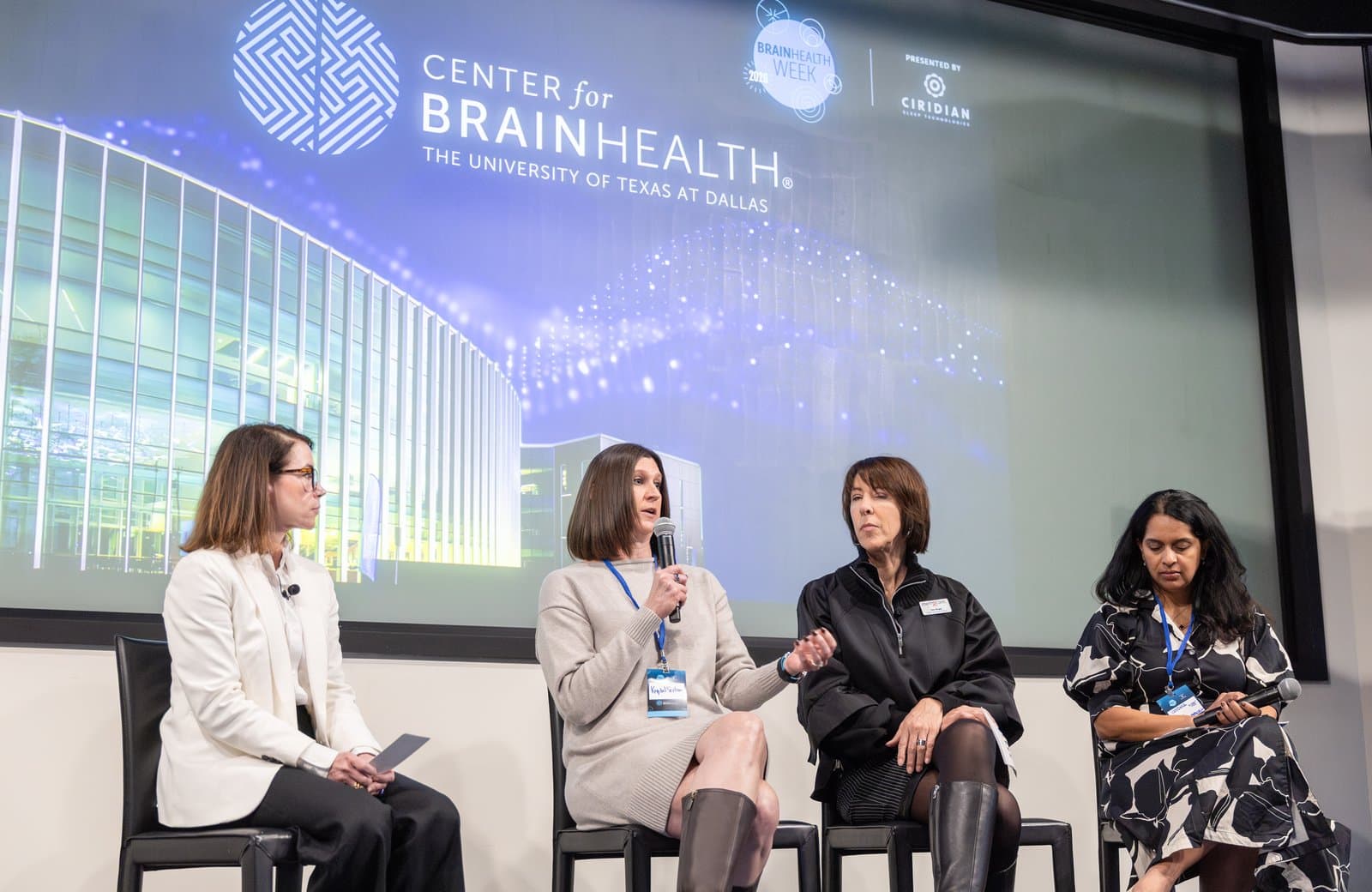
Featured speaker on the Center for BrainHealth's BrainHealth Week panel at UT Dallas, alongside Tate Ringer, Chief Strategy Officer of MetroCare (the Dallas County mental health and disability provider), and a built-environment design panelist. The session asked what evidence-based brain health implementation actually looks like once it leaves the conference room and lands inside a real organization.
Krystal opened with the arc that took her from cancer epidemiology into Shell's brain health work, and the inflection point that changed the conversation with leaders. "The real turning point for me was making that connection to safety, and showing leaders that the way they think and the way they act has a direct impact on something as critical as personal and process safety, which impacts not only individuals but also the planet. It is not a soft skill. It is actually a driver of business outcomes."
The panel walked through MetroCare's implementation playbook: train identified champions across all 18 disciplines (housing, homelessness, mental health, disability, administration, IT, HR), give those champions the agency to opt the agency into the work even after the CEO had committed, and then run six-week sprints on each brain-healthy habit with feedback loops back to leadership. The built-environment panelist made the case that space dictates behavior as surely as policy does, and that the design of indoor and outdoor "bumpability" determines whether a workforce builds community or simply moves from point A to point B.
Krystal returned to a specific corporate roadblock. "There was a very allergic response to the term brain health. There is a lot of imagery that conjures up that we are going to be measuring people's brains, or electrodes and fMRIs. There is just a stigma that still exists." Her workaround was to co-develop the program with leaders by anchoring brain skills directly to the strategic objectives those leaders had already committed to, which made the conversations real and sometimes vulnerable in a way that abstract wellness framing never could.
She closed with two pieces of advice she returns to in every implementation engagement. "Collect the metrics that matter, and get the employee voice involved. Don't just assume that those metrics are the ones that will be effective." MetroCare's parallel learning was that the work does not require an enormous team or a large capital outlay; it requires repetition, multimodal delivery, and leadership willing to give freedom, responsibility, and accountability at the same time.
Audience: brain health researchers, clinical and academic faculty at the Center for BrainHealth, healthcare and public-sector practitioners, and corporate partners exploring organizational brain-health implementation. Recording: https://youtu.be/f7h149FIvPo