Global Centre for Healthy Workplaces
"Mental wellbeing programs and guidelines: Where is the evidence?"
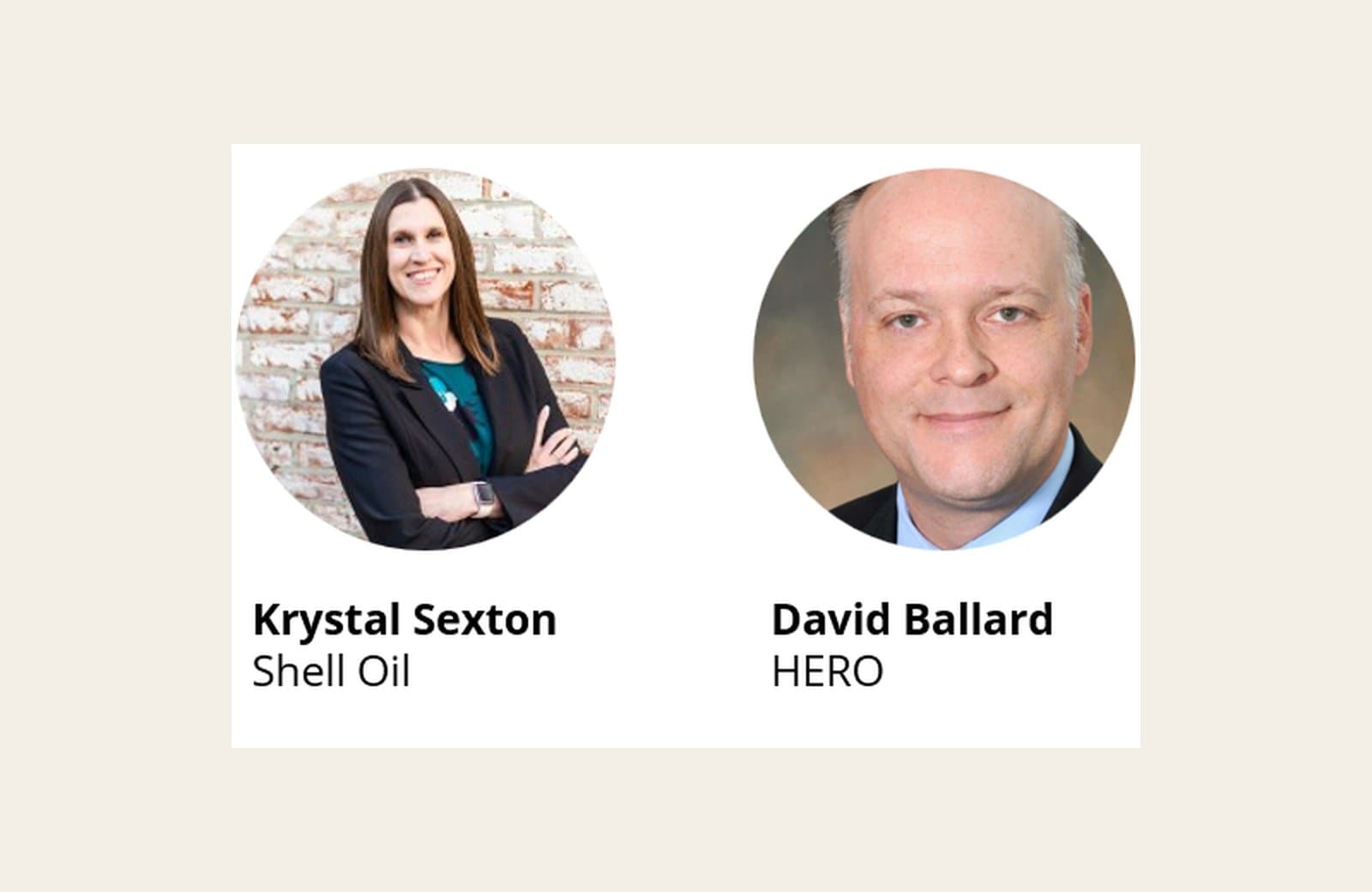
International Women's Day 2023 webinar hosted by Wolf Kirsten, co-director of the Global Centre for Healthy Workplaces, with Krystal joining longtime collaborator Dr. David Ballard. The session asked a sharper question than most webinars on the topic: what does the actual evidence base for workplace mental wellbeing programs look like, and how should employers translate it into practice.
David framed the market context, walking through the ISO 45003 standard's three dimensions of psychosocial risk: how work is designed (role clarity, demands, control), the social factors (leadership style, fairness, recognition, civility), and the work environment itself (lighting, noise, equipment, exposure). He then layered in the 2022 WHO guidelines on mental health at work, which separate organizational, manager, and individual interventions and explicitly cover return-to-work and inclusive employment for people living with mental health conditions.
Krystal then walked through Shell's arc, starting in the 2008-2009 financial crisis when a VP asked for a stress-management program reframed through positive psychology. That seeded a cross-discipline, cross-function, cross-region team that had been quietly rebuilding Shell's approach to mental wellbeing for over a decade by the time COVID hit. The team partnered with Shell analytics on mental-health pulse surveys (10 questions on knowledge and utility of EAP, line-manager support, stigma, burnout) and then on a structured pilot of about 6,000 participants, around 4,500 survey respondents, that ran for roughly eighteen months and generated more than 200 pages of qualitative feedback.
Krystal closed with a direct call to other large employers. "I think there's a real need for more collaboration between the researchers and the organizations. We've got a ton of research, maybe not in the real world workforce frequently. Organizations need to be more willing to share the data and to share their employee experience, in order to really make this stuff more practical and more applicable to all workplace settings."
Audience: occupational-health practitioners, EAP providers, and workplace mental health researchers across the Global Centre for Healthy Workplaces network. Recording: https://youtu.be/nY28rpTt77o