Science Summit of the 80th UN General Assembly (UNGA80), Cure., NYC
"Towards a Brain-Positive Organization"
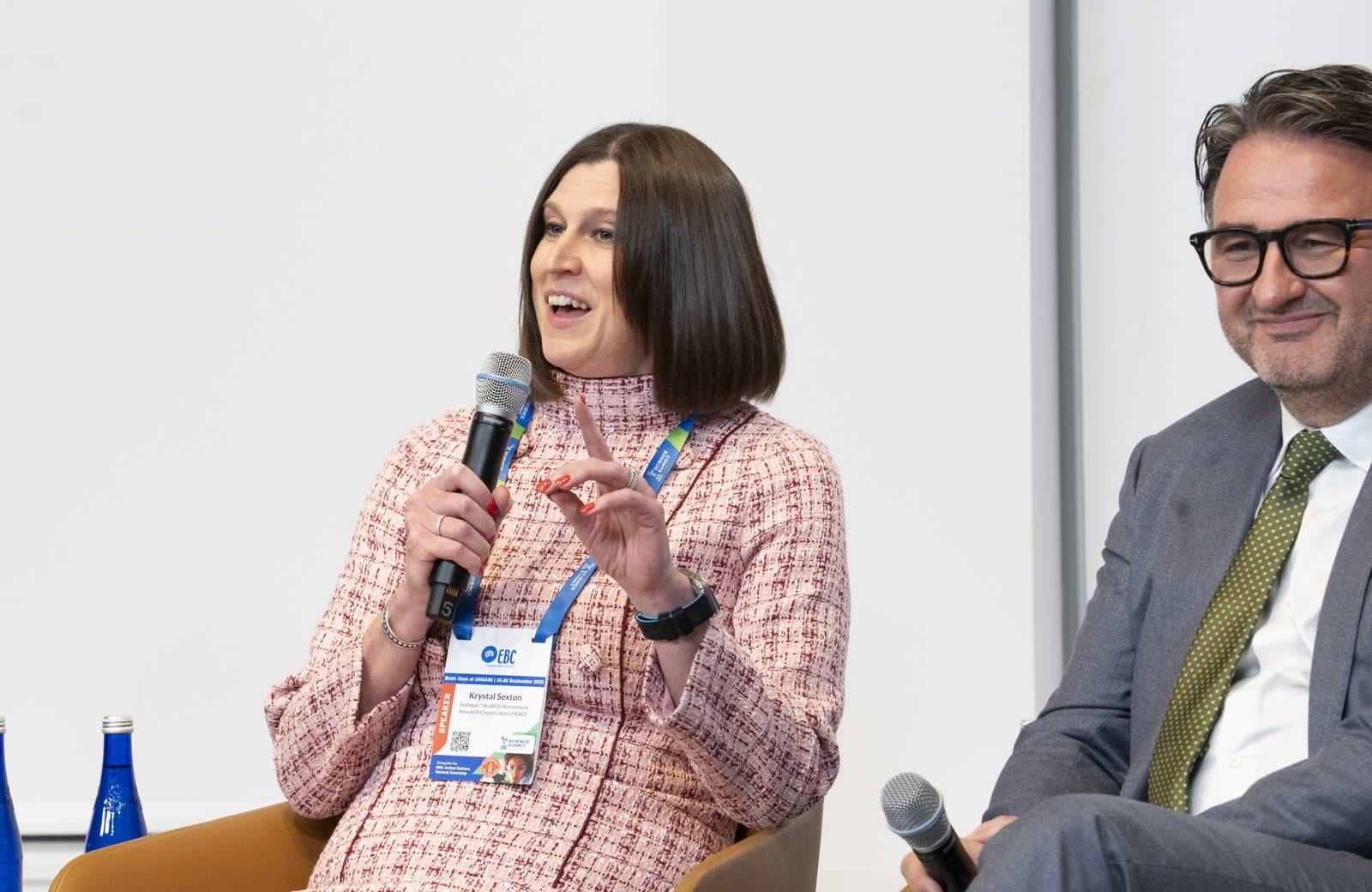
Krystal's second consecutive UN General Assembly Science Summit appearance. Panelist on "Towards a Brain-Positive Organization" during Day 2 of the three-day Brain Days programme at Cure., NYC. The programme was co-hosted by the European Brain Council, Global Brain Coalition, Brain Capital Alliance, Davos Alzheimer's Collaborative, Meadows Mental Health Policy Institute, and UNICEF.
Krystal anchored the panel with the Shell evidence base in numbers most CHROs and CFOs recognize. A propensity-score-matched cohort analysis of users of Shell's mental health service showed a 27% reduction in total cost of care among users compared to matched non-users. Eighty percent of users with two or more PHQ-9 measures showed clinical improvement. Time-to-service collapsed from roughly six weeks to a six-day median. Survey work continued to link program engagement to productivity and retention.
She used the runway to push the systems frame harder. "It is not just eat better, exercise more, sleep more. The real levers are psychosocial stressors, leadership, and organizational culture. We need solid evidence-based interventions that are effective, sustainable, and measurable." Krystal also returned to the origin-story argument she has carried since the early Shell days. "We were called do-gooders. We had doors shut in our faces." That history shaped the panel's central reframe: brain health is an asset, not a wellness perk, and the value compounds when employers stop treating their data as proprietary.
Krystal's closing argument was for cross-sector collaboration on a serious footing. "Huge organizations like Shell need to stop being so proprietary." There is already a brain health index and a brain health matrix that practitioners can build from rather than constructing redundant tools, and the academia-industry language gap remains the single biggest barrier to the field maturing. Unions surfaced as a surprising blocker inside Shell, where every unionized site had shut its program down, and that pattern itself is data the field needs to confront openly.
Audience: UN delegates, employer brain-health leads, neuroscience and public-health researchers, and the European Brain Council, Global Brain Coalition, and Davos Alzheimer's Collaborative network. Recordings: Brain Days Day 1 (https://youtu.be/tI_fc66PTog) and Day 2 (https://youtu.be/z5Ku5shNap8).